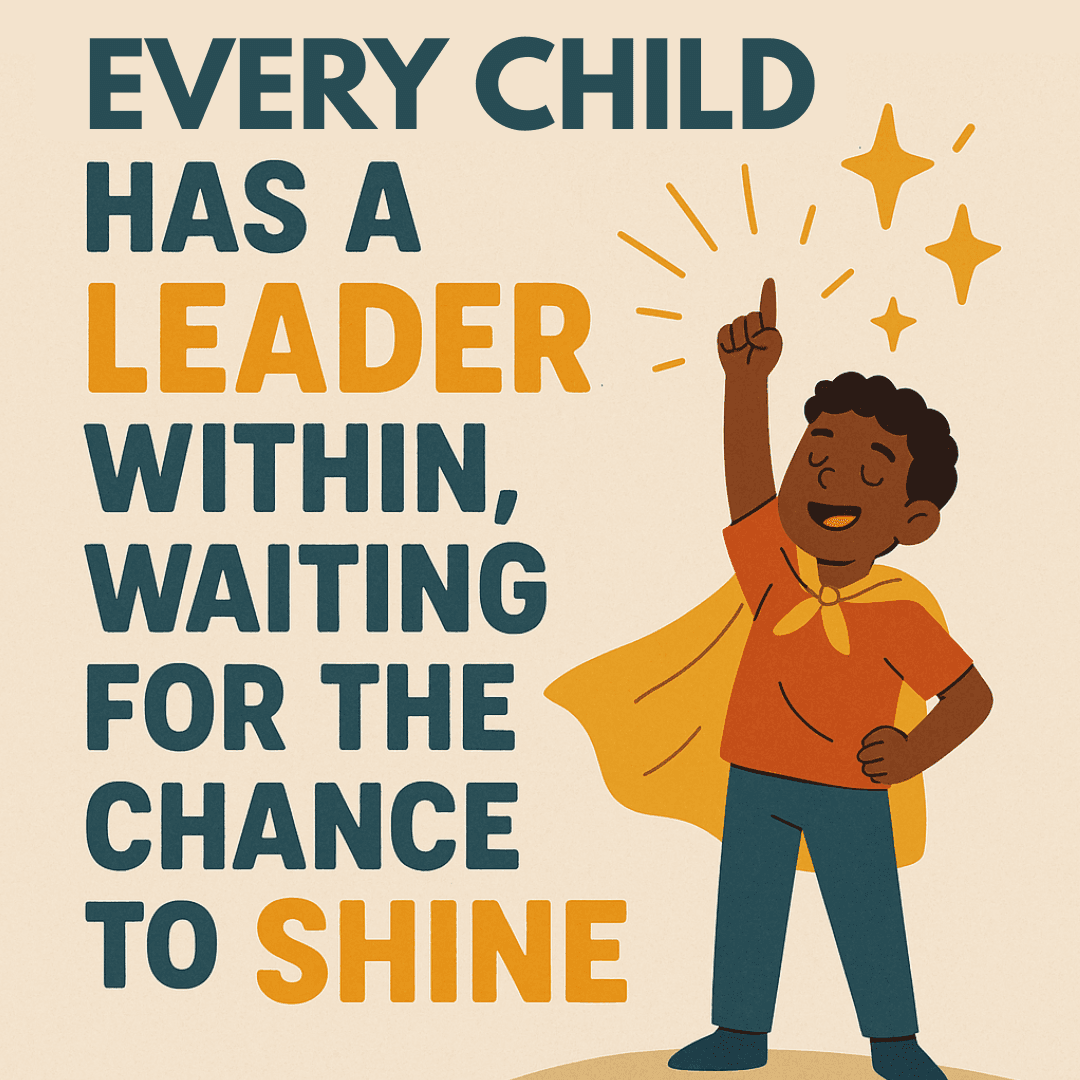
Every child has a leader within, waiting for the chance to shine.
 Lean Hyphen

Redefining Leadership
A while back, I was associated with an inclusive school, where one of my classes had a child with special needs. At first, the other students hesitated, unsure of how to respond to the child’s unique approach to learning and participation. But before long, the shift was magical- they adapted, embraced, and rose together. I watched them become protectors, allies, and true friends, never letting the child feel alone for even a moment.
The actions of those children showed how leadership skills aren’t just for those with badges, roles, or titles. In classrooms and playgrounds, collaboration, empathy, and communication often show up in small, everyday actions.
Let’s have an epiphany together! Leadership is not about authority or title; it’s about influence, responsibility, creativity, and initiative. It can be as simple as including someone in a game, offering a helping hand, or standing up for what is fair.
“Every child has a leader within, waiting for the chance to shine.” – Unknown
Leading by Example
Let’s imagine a domino effect. When you topple one block, the rest of them follow. In the same way, when a student chooses kindness, it spreads almost contagiously. When one child dares to ask a thoughtful question, it gives peers the courage to voice their thoughts too.
Small acts like these spark a ripple effect across the classroom or the school. That’s the power of leading by example- it gently sows the seeds of teamwork, resilience, and problem-solving, often showing up in the simplest, most innocent gestures of kindness and courage.
Listening – An Underrated 21st Century Skill
Children who don’t wait for a title like class monitor, group leader, or activity head to make a difference truly show leadership potential. At the heart of it all is empathy.
Small acts like being kind to peers and teachers, taking the initiative to help, keeping the classroom clean, or ensuring no one feels left out are powerful demonstrations of social-emotional learning (SEL). What sets such students apart is their ability to ‘read the room’. They notice when someone is struggling, sense how their peers are feeling, and respond with care.
They listen not just with their ears but with their hearts- valuing the other person’s words and opinions. These everyday gestures may seem simple, but they carry immense weight. They strengthen classroom communities and nurture the kind of thoughtful, empathetic leaders our future workforce needs.
Be a Thought Leader
Every new idea begins with a powerful thought. A thought leader is someone whose critical thinking, creativity, and problem-solving inspire others to think bigger.
In class, these are the students who dare to question “why not” when others settle for “this is how it’s done.” When a child reinvents a way to solve a problem, suggests fresh ideas during group activities and discussions, or manages a conflict gracefully, they are leading with their mind.
In today’s fast-changing world, when innovation and adaptability matter more than ever, children who think and work efficiently are the ones shaping the future. They remind us that leadership doesn’t always wear a badge- it often begins with a question.
Creating Opportunities in School
Schools can design countless opportunities that bring out the leader in every child. In group projects, for instance, students learn to take charge by dividing tasks, motivating quieter classmates to share their ideas, and collaborating on creative solutions. Peer mentoring, too, serves as a powerful platform where children not only guide others but also cultivate empathy and a sense of responsibility.
By recognizing and celebrating these everyday opportunities, schools can help students see that leadership development isn’t about waiting for titles, but about making a difference wherever they are.
We Are Doing Our Bit
At LeanHyphen, we design experiences that equip children with essential 21st-century skills like leadership, communication, collaboration, and creative problem-solving.
Research shows that 85% of future job success depends on soft skills like teamwork, adaptability, and empathy, while only 15% depends on technical knowledge. This makes it even more critical to nurture future-ready skills in young learners- skills that help them think critically, act responsibly, and lead with empathy.
As we guide children to become everyday leaders, we’re not just preparing them for classrooms or workplaces- we’re preparing them to shape the world.
“Children are not just the leaders of tomorrow; they can be leaders today, in their own unique ways.” – Unknown